
Are you planning a trip to the Loire Valley?
Between Renaissance castles, vineyards, riverside villages and cycle paths, the region offers a varied and accessible travel environment.
Here's all the information you need to answer your question: is the Loire Valley safe?
With all our tips for a carefree stay.
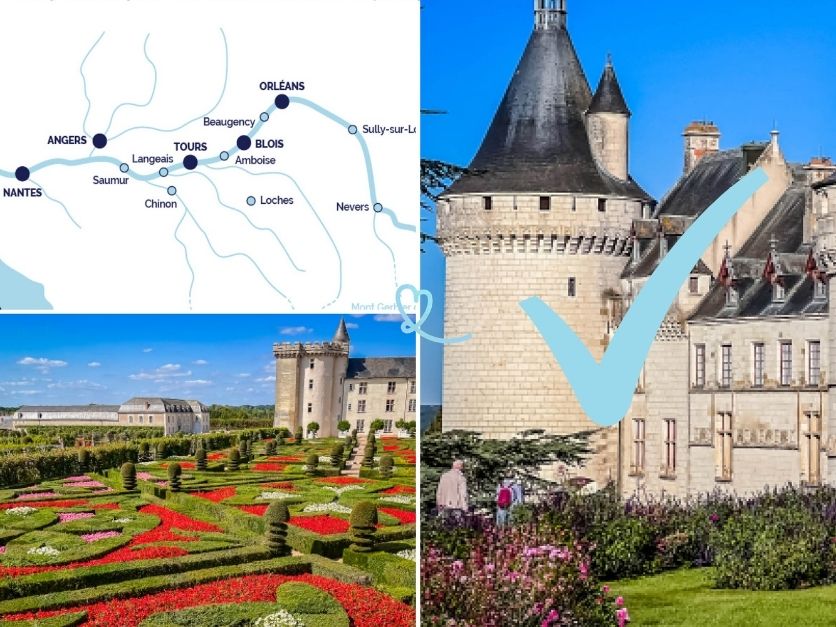
This guide is completely independent, based on our experiences. We visited the region anonymously, making our own choices and paying our bills in full.
How safe is the Loire Valley? Quick response
Yes, the Loire Valley is a safe destination. It's one of France's most popular tourist regions, well equipped with infrastructure and services.
The risks to be aware of are a few points of vigilance in the big cities, around the river, as well as seasonal weather hazards.
On the whole, we never felt particularly unsafe during our stays in the region, whether in the villages, in the countryside or along the river.
The Loire Valley is a French region where French laws apply. It has been a UNESCO World Heritage Site since 2000.

WHERE TO STAY IN THE Loire Valley
Our independent picks for the accommodation of your dreams:


Theft and petty crime
The countryside and villages of the region are generally very quiet. Vigilance is especially important in large cities, as in any French urban area. Tours, Orléans and Angers are safe cities, with pleasant downtown areas. However, pickpocketing can occur in crowded areas, such as markets, public transport and busy terraces.
Nantes deserves a little more attention. The city remains accessible and pleasant to visit, but like other travelers, we've noticed an increase in uncivilized behavior in certain neighborhoods in recent years. This doesn't detract from the appeal of the city, which we recommend you visit, but it's best to keep your wits about you, especially in the evenings in the less central areas.

Advice:
- In town centers and markets, keep your valuables with you and avoid leaving bags unattended.
- Don't leave anything visible in your car, especially in city parking lots or the parking lots of popular castles such as Chambord.
- In Nantes, choose the central districts (Bouffay, Île de Nantes) for your evening trips
OUR TIPS FOR RENTING A CAR IN Loire
- Compare prices on our preferred platform: DiscoverCars - one of the best rated sites.
- Choose a fairly compact car (many villages have narrowed the road).
- Think aboutfull insurance (parking in big cities is really tight).
- There is a lot of demand, book it early.

Safety around the Loire River

The Loire is the longest river in France and one of the last great wild rivers in Western Europe. This preserved natural character is a source of wealth, but it also implies a few precautions. The current can be strong in places, and the river bottom is irregular and sometimes soft. Swimming is officially prohibited in many sections, notably between Saumur and Orléans, due to currents and shifting sandbanks.
In addition, spring floods are frequent, limiting access to certain areas. We ourselves saw a flood on the banks of the Loire during a trip in April.
Advice:
- Respect no-swimming signs, even if the water appears calm on the surface.
- Keep an eye on children near banks, which can be slippery.
- Check river levels before going boating or kayaking, especially in spring.
Hiking and outdoor activities

The Loire Valley offers trails accessible to all levels. Most routes are well-marked and have no major technical difficulties. However, some of the wilder areas, particularly in the south of the region around the hills of Touraine or the Saumurois, have steeper passages. The weather can also change. Finally, we recommend not underestimating the heat in July and August. Even in temperate regions, days can exceed 35°C, and heatstroke is still possible during physical exertion.
Advice:
- Leave early in the morning in summer to avoid the hottest hours (between 12 and 4pm).
- Carry plenty of water, a map or offline application, and let someone know where you're going.
- Check the weather forecast: thunderstorms can happen.

Safety on the Loire à vélo

The Loire à vélo is one of Europe's most popular cycling itineraries, with 900km of signposted routes between Cuffy (Cher) and Saint-Brevin-les-Pins (Loire-Atlantique). Overall, it's a safe itinerary, with a good proportion of it on dedicated cycle lanes. However, some sections cross departmental roads shared with motorized vehicles. When this is the case, we advise you to be more vigilant.
Advice:
- Wear a helmet and visible clothing, especially on shared roadways.
- Equip your bike with front and rear lights if you ride at the end of the day.
- Remain vigilant on portions shared with cars
Is it dangerous to drive in the Loire Valley?

On the whole, driving in the Loire Valley is accessible and not particularly difficult. The road network is well maintained, and the A10 and A85 freeways provide quick links to the region's main towns. National and departmental roads are generally wide and well-signposted. In high season (July-August), some of the roads around the most visited castles, notably Chambord and Chenonceau, can be congested in the late morning. We recommend arriving early to avoid traffic jams at the parking lot entrances.
In the city, Tours and Nantes have partially pedestrianized historic centers. Parking your car can be time-consuming, so it's best to opt for parking on the outskirts of the town and reach the center on foot or by public transport.

Advice:
- It's easy to rent a car, so you can explore at your own pace.
- Bring a GPS or navigation app: some country roads run through areas with no cell phone network.
- In winter, some secondary roads may be icy during cold spells, which are rare but possible.
- Morning fog is common in autumn, especially on the banks of the Loire: adapt your speed
Can we drink the water in the Loire Valley?
Yes, tap water is drinkable everywhere in France, including the Loire Valley. It is processed and tested in accordance with current European standards. You can therefore drink it without fear in the region's hotels, restaurants and accommodations.
Weather and seasonal risks

The climate of the Loire Valley is temperate oceanic, with hot summers and mild winters. That said, some hazards are worth knowing about before you leave.
In spring (March-May), flooding is the main concern. The Loire and its tributaries can rise rapidly after heavy rainfall. Bank paths and levee roads are temporarily closed. In summer (June-August), the heat can be considerable, especially during the increasingly frequent heat waves. In some years, water restrictions are in place in the region. In autumn, morning fog is common and rain gradually returns. In winter, the region is calm and cold, with the occasional risk of frost. Most of the Loire castles remain open.
Advice:
Check weather forecasts and river levels (available on the national Vigicrues website) before planning outdoor activities, especially in spring.

It's time to book!
Compare everything: companies, prices, schedules and availability.
Guided tours: carefree, guided travel

If you want to enjoy the region without worrying about logistics, guided tours and excursions are an excellent option. A local guide will take you to the sites, explain the history and save you precious time, especially at the entrances to popular castles like Chambord and Chenonceau. We ourselves enjoyed these guided tours, which enabled us to go further in our understanding of the sites, for example, to decipher Renaissance architecture or the court intrigues that played out in these castles.
It's also an easy way to visit several sites in one day, without worrying about parking or itineraries.
See all guided tours and day trips in the Loire Valley
Emergency numbers in the Loire Valley
In France, as throughout the European Union, 112 is the single number for all emergencies: police, ambulance and fire. Operators can express themselves in several languages.
It's the only number to remember in an emergency.
Other useful numbers:
- 15: SAMU (medical emergencies)
- 17: Police
- 18: Fire brigade
PLAN YOUR TRIP IN
Loire Valley
The castles of the Loire Valley
Other places to explore

Practice


HE MADE THE TRIP Manu